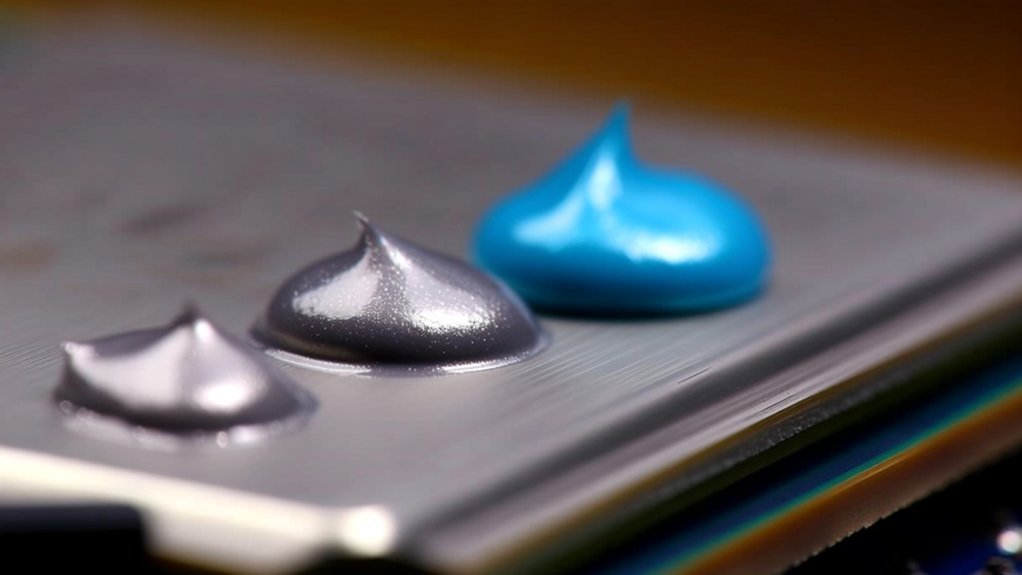
3 Best Thermal Pastes for CPU Overclocking
When overclocking your CPU, choosing the right thermal paste isn’t just a tweak—it’s crucial for keeping temperatures in check under heavy loads. High-quality options like Arctic MX-4 or Thermal Grizzly Kryonaut provide superior thermal conductivity, ensuring your system stays cool and stable during intense sessions. But with so many choices, how do you pick the best one for your setup? Stick with me, and we’ll explore the top thermal pastes that can make all the difference in your overclocking efforts.
Maxtor Thermal Compound Paste (MTP-8301C)

- High Performance: Suitable for thermal paste CPU, GPU, heatsink, ovens, IC chipset, PS4/PS5/Xbox, high-power LED, and other components.
- High-Quality Thermal Conductivity: 12 W/m-k , Net Weight:150/300gram
- High-Quality Compound: Helps disperse the heat from CPU to heatsink effectively.
If you want to keep your CPU cool, especially when overclocking or using high-performance parts, Maxtor’s Thermal Compound Paste (MTP-8301C) is a good choice. It comes in a 150g tube, which gives you plenty of paste to use. The paste has a thermal conductivity of 12 W/m·K, meaning it helps heat move away from your processor quickly. This helps prevent overheating and keeps your system stable.
The paste is non-electrically conductive. This is important because it lowers the chance of causing a short circuit if the paste touches other parts inside your computer. The package includes three small spatulas to help you spread the paste evenly. It also comes with clear instructions, so even beginners can easily apply it.
This thermal paste is ideal for gamers, overclockers, and hobbyists who want good heat transfer for CPUs, GPUs, and other electronic parts.
Pros:
- It transfers heat well with a thermal conductivity of 12 W/m·K.
- It is safe to use because it doesn’t conduct electricity.
- Comes with three applicator spatulas and instructions for easy use.
Cons:
- The 150g tube may be more than needed for small projects, which could be wasteful.
- You need to spread the paste carefully to avoid uneven heat transfer.
- Larger tubes can be less handy for quick or occasional uses.
If you need a reliable thermal compound that transfers heat efficiently and is safe to use, Maxtor MTP-8301C is a solid option.
Thermal Paste with Toolkit for CPU and Heatsinks

- SAFETY APPLICATION: BSFF is metal-free and non-conductive, which eliminates any risk of short circuit and adds more protection to the CPU and VGA card.
- BETTER THAN LIQUID METAL: It is made of carbon microparticles, guaranteeing extremely high thermal conductivity. This ensures that heat from the CPU/GPU is...
- HIGH DURABILITY: BSFF thermal paste Edition formula has excellent component heat dissipation performance and has the stability to push the system to the limit.
A thermal paste with a toolkit makes it easy to improve your CPU or GPU. It helps keep temperatures low and can help with overclocking. The kit includes everything you need for a smooth application. The paste is made with safe, non-conductive materials, so there’s no worry about short circuits. It uses carbon microparticles, which pass heat fast away from your processor or graphics card.
The package contains 1.8 grams of paste. It also comes with tools to help you put it on perfectly. Even if you are new to installing or replacing thermal paste, this kit makes it simple. The paste lasts for more than 5 years without losing its cooling power. You can count on it to keep your PC running cool for a long time.
This all-in-one set is great for both beginners and experienced users. It makes thermal management easy and safe.
Good for: People who want an simple, safe way to keep their CPU or GPU cool and improve its performance.
Pros:
- No metal parts, so it won’t cause short circuits
- Passes heat quickly thanks to tiny carbon particles
- Lasts many years, keeping your system cool
Cons:
- Only 1.8 grams of paste, so you might need more if you do many applications
- You need to clean old paste fully before applying new paste
- Slightly more expensive than basic thermal pastes without tools
This kit makes it easier to keep your computer cool and perform better. Whether you are new or experienced, it’s a handy tool to have.
ARCTIC MX-4 Thermal Paste (4g)

- CONSISTENT QUALITY: Our thermal paste packaging design has evolved over time, but the formula has remained the same, ensuring reliable performance.
- EXCELLENT PERFORMANCE: ARCTIC MX-4 thermal paste is made of carbon microparticles, guaranteeing extremely high thermal conductivity. This ensures that heat from...
- SAFE APPLICATION: The MX-4 is metal-free and non-electrical conductive which eliminates any risks of causing short circuit, adding more protection to the CPU...
ARCTIC MX-4 Thermal Paste comes in a 4g tube. It is a popular choice for people who want to keep their computers cool. This paste has great thermal conductivity, which means it can transfer heat very well. This helps your CPU or GPU stay cool even when they work hard. It uses tiny carbon particles to help with heat transfer. The paste stays the same quality even if the packaging changes. It’s non-conductive and doesn’t have metal, so it’s safe and less likely to cause short circuits. It has the right thickness, making it easy to apply, even for beginners. Whether you are overclocking or just want your computer to run smoothly, MX-4 is a reliable option.
Best For: DIY PC builders, overclockers, and anyone who wants a good thermal paste for CPUs or GPUs.
Pros:
- Transfers heat well
- Safe to use, no metal involved
- Easy to put on, good for beginners
Cons:
- Comes only in a small 4g tube; you might need extra for big builds
- Slightly more expensive than basic options
- You need to apply it carefully for the best results
This thermal paste is a solid choice for anyone who wants to keep their computer cool and running smoothly.
Factors to Consider When Choosing Thermal Pastes for CPU Overclocking
When choosing a thermal paste, you’ll want to pay attention to its thermal conductivity rating, as higher numbers mean better heat transfer—critical when overclocking. Ease of application matters too, since some pastes are trickier to spread evenly without ending up in places you’d rather keep cooler than on your motherboard’s pretty circuits. Finally, considering factors like electrical non-conductivity, longevity, stability, and material safety helps prevent surprises like short circuits or dried-out paste that won’t do its job after a few months—because nobody has time to reapply thermal paste every other week.
Thermal Conductivity Ratings
Understanding thermal conductivity ratings is important when picking a thermal paste for your CPU. This number shows how well the paste moves heat away from your processor to the heatsink. A higher number, above 10 W/m·K, usually means the paste can transfer heat better. This is nice for overclocked CPUs that get hot faster. Think of thermal conductivity as how quickly heat can pass through the paste. The higher the number, the faster the heat can flow. It is measured in watts per meter-kelvin (W/m·K). But remember, other things like how thick the paste is or how stable it stays also matter. Picking a thermal paste with a good conductivity rating helps keep your CPU cool, even when it works harder.
Ease of Application
Choosing the right thermal paste isn’t just about how well it cools your computer. It’s also about how easy it is to use. You want a paste that spreads smoothly and evenly. If the paste is too thick or sticky, it can be hard to spread. A good thermal paste should be easy to work with, especially if you need to apply it quickly or in small spaces.
Many high-quality thermal pastes come with tools or applicators. These help you put the right amount in the right place. They also help you avoid spills or uneven layers. When the paste spreads evenly, it makes a better connection between the CPU and the heatsink. This helps your computer stay cool and work better.
Applying thermal paste should be simple. When you use the right kind, it takes less time and effort. It also stays effective longer. This means you won’t need to reapply it often. That is important if you like to tune or overclock your computer. A easy-to-use thermal paste makes building or fixing your PC a smoother process.
Electrical Non-Conductivity
Even if you’re good at installing things, choosing a thermal paste that’s not conductive helps keep your computer safe. This is especially true when you push your CPU to run faster or overclock. Non-conductive pastes stop electricity from flowing where it shouldn’t. This keeps your computer from shorting out or breaking.
Most good thermal pastes made for overclocking are non-conductive. They are designed to keep your parts safe and work well. Picking this kind of paste adds a layer of safety. It makes your build more reliable and decreases the chance of electrical issues.
Using a non-conductive thermal paste is a simple step that can stop problems and save money. It helps protect your computer while you get the best performance. That way, you won’t have to worry about accidents or damage.
Longevity and Stability
When you overclock your CPU, keeping the thermal paste working well over time is important. It’s not enough to just put it on once. The paste needs to stay effective after long, tough sessions. Look for a thermal compound that can handle high temperatures without breaking down or drying out. If it does, heat won’t transfer properly, and your CPU could overheat.
Choose a paste that stays stable and doesn’t change chemically. This helps keep a tight seal between the CPU and the heatsink. Also, pick pastes that do not conduct electricity or cause corrosion. These features help prevent electrical shorts and damage inside your computer.
Applying a good, long-lasting thermal paste helps fill the gaps between the CPU and heatsink. This reduces resistance and keeps heat from building up. That way, your CPU stays cool, even when you push it hard for hours. Properly chosen and applied thermal paste is key to keeping your system stable and running smoothly.
Material Composition Safety
When choosing a thermal paste, safety matters most. The right paste helps keep your computer cool and protected. Some pastes are metal-based, like silver or copper. These work well for heat transfer, but they can also be electrical conductors. That means if they touch other parts, they could cause a short circuit. Keep them away from sensitive components or make sure they are well insulated.
Other types of pastes are made from ceramic or carbon particles. These types don’t conduct electricity. They help prevent shorts and damage to your parts. This makes them safer to use, especially if you overclock your CPU and push it to the limit.
It’s also good to pick a paste made from non-toxic and inert materials. These last longer and resist corrosion. Always check if the product says it is non-conductive and safe. Using the right thermal paste protects your components from damage. It also helps your computer run smoothly and reliably, even at high temperatures. Think of it as a safety net for your CPU.
Compatibility With Hardware
Choosing the right thermal paste for your CPU is all about compatibility. You need to make sure the paste fits your CPU socket and chip type. If it doesn’t match, it can be hard to install and may cause problems.
High-performance cooling needs a paste that can handle extra heat. Check the thermal conductivity rating, which tells you how well it transfers heat. The higher the number, the better it is for overclocked CPUs.
Also, look at what the paste is made of. Some chemicals can harm your parts if they aren’t compatible. Make sure it’s safe for your CPU and other hardware.
Think about your heatsink or cooling system too. The paste should work well with your setup for maximum heat transfer.
In short, always check if the thermal paste works with your specific hardware. Using the wrong one can cause poor cooling or even damage. Compatibility isn’t just important — it’s the key to keeping your PC cool and safe. If you skip this step, overheating becomes a real risk, not just a small worry.
Viscosity and Spreadability
Viscosity and spreadability are important when choosing a thermal paste for your CPU. Viscosity is how thick or runny the paste is. If the paste is too thick, it’s hard to spread and might not cover the CPU evenly. If it’s too runny, it can spread too thin or leak out, which isn’t good.
The best thermal paste has the right balance. It’s thick enough to stay in place after you spread it, but still easy to spread out evenly. This helps create a smooth, thin layer that makes good contact between the CPU and the heat sink. Good contact means better heat transfer, keeping your CPU cooler.
Picking a paste with the right viscosity makes the application easier and keeps your computer running cool during overclocking.
Price and Value
Choosing the right thermal paste depends a lot on price and value. When you pick a paste for overclocking, you want one that improves cooling without costing too much. Usually, more expensive pastes work better. They transfer heat from your CPU to the cooler faster. This is important when you push your computer to run faster.
Good quality paste lasts longer. It stays stable and keeps your CPU cool during intense tasks. That means you won’t have to reapply it often. Cheaper pastes might seem like a good deal at first. But they can wear out faster and don’t move heat as well, which can make your CPU run hotter.
To get the best value, think about how well the paste heats up your CPU, how long it lasts, and how stable it stays under pressure. Don’t just focus on the price per gram. Looking at these things helps you choose a paste that gives you the most for your money. This way, your CPU stays cool, and you don’t spend too much.
FAQs
How Often Should Thermal Paste Be Reapplied During Overclocking?
You should reapply thermal paste every 1 to 2 years when overclocking, or if temperatures rise unexpectedly, your CPU becomes unstable, or you notice dried or degraded paste. Regular checks help maintain peak cooling performance.
Is Silicone-Based Thermal Paste Better Than Ceramic or Metal-Based Options?
Silicone-based thermal paste offers flexibility and good thermal conductivity, but ceramic and metal-based options generally provide better heat transfer. You might prefer ceramic for electrical insulation or metal for superior performance during overclocking.
Can Thermal Paste Improve CPU Lifespan Under Overclocked Conditions?
Yes, thermal paste can help improve your CPU’s lifespan under overclocked conditions by maintaining lower temperatures. Proper application guarantees efficient heat transfer, reducing stress on your processor and potentially extending its operational life during overclocking.
Are There Thermal Pastes Optimized for High-Altitude Overclocking?
Yes, some thermal pastes are optimized for high-altitude overclocking, featuring enhanced thermal conductivity and resistance to low-pressure conditions. You should look for pastes specifically designed for extreme environments, ensuring your CPU stays cooler at higher elevations.
Does the Application Method Significantly Affect Cooling Performance?
Yes, the application method considerably impacts cooling performance. You should apply thermal paste evenly with a thin layer or use the spread method, ensuring there’s no air gap or excess, so heat transfers efficiently from your CPU to the heatsink.
Last update on 2026-02-06 / Affiliate links / Images from Amazon Product Advertising API