
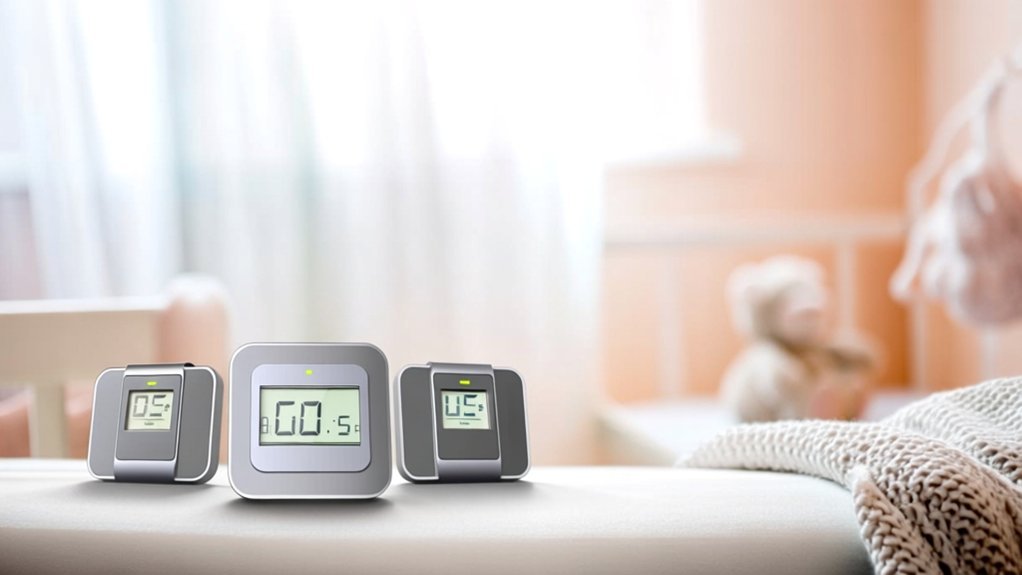
3 Best Temperature Sensors for Nursery Room Monitoring
When it comes to choosing the best temperature sensors for your nursery, you want devices that provide precise readings and reliable alerts without becoming a tech headache. From Bluetooth-enabled gauges that sync effortlessly with apps to models with automatic calibration, there are options that fit different needs and budgets. To make an informed decision, you’ll need to understand key specs like accuracy, battery life, and data storage. Curious which sensors truly stand out? Let’s explore the top contenders.
Govee Digital Hygrometer Indoor Thermometer with Bluetooth and App Control

- Smart Features: The Govee Wireless Thermometer Hygrometer supports all basic functions as well as smart functions such as remote monitoring and temp humidity...
- High Accuracy and Fast Refresh Time: With the Swiss-made smart hygrometer sensor, the temperature is accurate up to ±0.54°F while the humidity is ±3%RH, a...
- Upgraded Display: This room humidity gauge is easy to read due with a 3-inch bright LCD screen with large numbers. The max/min temp humidity records and the...
If you want a reliable thermometer to check the temperature and humidity in your nursery or other indoor spaces, the Govee Digital Hygrometer is a good choice. It has Bluetooth that works up to 164 feet, so you can check the stats from far away. You can control it with a smartphone app, making it easy to peek at the data from another room or even outside.
The device has a 3-inch bright LCD screen. It shows the highest and lowest temperature and humidity readings. It also has indicators for dry, comfortable, or wet air. Swiss-made sensors ensure accurate readings. The thermometer measures temperature within plus or minus 0.54°F and humidity within plus or minus 3% RH. It updates data every 2 seconds, giving you real-time info. This helps keep your little one cozy and safe.
This hygrometer is perfect for parents, home gardeners, or anyone who needs to keep a close eye on indoor conditions. It works well in nurseries, wine cellars, greenhouses, or places where temperature and humidity matter.
Some pros are:
- Bluetooth can reach up to 164 feet, so you can easily check data from afar.
- The sensors are very accurate.
- It updates quickly and keeps records for up to two years.
Some cons are:
- You need a smartphone with the app to get all the features.
- It saves data for 20 days, so you may need to export data often for long-term tracking.
- Walls or obstacles can block Bluetooth signals, making it harder to connect.
Govee Bluetooth Indoor Hygrometer with App Monitoring

- Easy to Connect: Simply download the Govee Home app, search for and select H5075, and pair it successfully within minutes. With a 196ft/60m Bluetooth range,...
- Accuracy: Built-in Swiss-made smart hygrometer sensor, the temperature is accurate to ±0.54°F while humidity is ±3%RH. It provides high precise monitoring....
- Large LCD Display: It offers realtime temp/humidity readings with large numbers and max/min records on 3 inch LCD screen, comes with 3 level comfort indicators...
The Govee Bluetooth Indoor Hygrometer with App Monitoring is a good choice for anyone who wants quick and reliable updates on temperature and humidity. It’s easy to set up using the Govee Home app. Pairing the device takes just minutes. It works within a Bluetooth range of 196 feet—that’s about the length of a small park. The device is small and simple to hide out of sight. It has a big 3-inch LCD screen that shows readings clearly.
Even though it doesn’t have backlighting, you can connect multiple units. It also keeps track of two years’ worth of data. Plus, you get alerts if conditions go outside your set range. It’s accurate, affordable, and good for checking on delicate spaces like a nursery.
Best For: Home users and hobbyists who want easy, reliable indoor humidity and temperature info. No need for fancy setup or remote control outside Bluetooth range.
Pros:
- Easy to set up through the Govee app and Bluetooth
- Accurate sensors with options for calibration
- Tracks and exports two years of data and sends alerts
Cons:
- No backlight, so it’s harder to see in dark places
- No magnet for sticking on metal surfaces
- Only works within Bluetooth range; no Wi-Fi or remote control outside that
This device is simple to use, accurate, and does a great job of keeping you informed about your indoor environment.
ThermoPro TP50 Digital Hygrometer, Indoor Thermometer & Humidity Gauge

- Wellness Indicator: This humidity meter with humidity level icon indicates air conditions - DRY/COMFORT/WET, allowing this humidity sensor to ensure you’re...
- High accuracy and quickly refresh: Inside thermometer has high accuracy of ±2~3%RH and ±1°F, making it ideal for measuring fluctuating readings like in a...
- High & low records: Accurate hygrometer digital thermometer displays high and low temperature & humidity, always get ready to the changes of the environment
The ThermoPro TP50 Digital Hygrometer is a handy tool for checking the temperature and humidity in a nursery or any indoor space. It gives quick, accurate readings every 10 seconds. The device tells you if the air is dry, comfy, or wet with simple icons—DRY, COMFORT, and WET. This makes it easy to see if the room has the right air quality for your baby or child.
You can place the ThermoPro TP50 on a desk or shelf using its little stand. Or, stick it on the fridge with the magnetic back. It runs on one AAA battery, which you will need to replace when it runs out.
This device is simple to use and reliable. It helps you keep a safe and comfortable environment for your little one. It is great for parents and caregivers who want to check the room’s air quality quickly and easily.
Pros:
- Gives real-time, precise temperature and humidity updates
- Uses icons for quick and easy understanding
- Can be placed on a table or fridge
Cons:
- Needs a new AAA battery when the old one dies
- Only works indoors, not outside
- The small screen might be hard to see if you have trouble with your eyes
The ThermoPro TP50 is a simple, useful gadget for making sure your baby’s room stays cozy and safe.
Factors to Consider When Choosing a Temperature Sensor for Nursery Room Monitoring
When choosing a temperature sensor for your nursery, you’ll want to consider how precise and accurate it is—because baby’s comfort depends on it—and whether it can connect easily to your devices, whether via Wi-Fi, Bluetooth, or wired options. Think about how much data it can store, especially if you’re tracking temperature trends over time without constantly checking the device, and whether it’s simple enough to use without needing a tech degree. Finally, alert functions like alarms or notifications can save you from ever missing that sudden temperature spike or drop—no more accidental snoozes on essential warnings!
Accuracy and Precision
Getting the temperature right in a nursery is very important. Small changes can make a big difference for a baby’s comfort and safety. To do this well, choose sensors that give accurate readings, usually within about half a degree. This helps you trust what you see and keeps the room cozy.
Some sensors are very precise. They can notice tiny changes in temperature. This allows you to catch a small drop early and set things right before it becomes a problem. Calibration features are also important. They keep the sensor measurements steady over time, so you don’t have to guess if they are off.
Look for sensors that refresh data quickly. About every 2 seconds is good. Fast updates give you a real-time look at the room. You can see right away if the temperature changes, so you can act fast and keep the nursery safe and snug.
When picking a sensor, choose one known for accuracy, quick updates, and easy calibration. These features help you keep the nursery at the perfect temperature for your baby’s comfort and safety.
Connectivity Options
Choosing the right way to connect your nursery sensor is important. It affects how easily you get updates about your baby.
Bluetooth sensors work over short distances, about 164 to 196 feet. Think of it like a walkie-talkie. You need to be close to hear updates.
Wi-Fi sensors let you watch from anywhere. You need internet to check on your nursery. This is good if you are busy or away from home.
Some sensors can connect with both Bluetooth and Zigbee. This makes it easier to add them to your smart home setup.
Make sure your sensor works well with your other devices. This helps things run smoothly and saves you trouble.
Bluetooth is good for nearby updates. Wi-Fi gives you more freedom to check from anywhere. Pick the one that matches how you want to use it and your tech setup.
Data Storage Capacity
A sensor’s data storage capacity is important for how well you can check your nursery’s environment over time. If you want to see temperature patterns, choose devices with plenty of storage. These can keep weeks, months, or even years of data. Having this long-term info means you don’t need to keep downloading or resetting often. It keeps your data safe and easy to get back later. Good storage also makes it simple to export your data as files like CSV. This helps if you like to keep detailed records or analyze trends.
But watch out—if your device has small storage, you may need to delete old data manually or risk losing information. Pick a storage size that matches your needs. If you want to watch environmental changes over time, more storage is better. It helps you stay organized and find patterns easily. A good storage choice makes keeping a steady eye on your nursery much simpler.
Ease of Use
Choosing a temperature sensor for your nursery should be easy. Pick one that is simple to use. It should be quick to set up with clear instructions. Look for a big, easy-to-read display. You want to see the temperature right away without changing settings. The buttons or menu should be simple to understand. It helps even beginners use the device without trouble.
Some sensors have automatic calibration. This keeps the reading accurate without extra effort from you. Wireless features like Bluetooth or Wi-Fi should connect easily. Avoid devices that need lots of steps or details to pair.
All these simple features make checking your baby’s room quick and stress-free. You don’t want technology to be a hassle. Choose a sensor that is straightforward and easy to use every day.
Alert Functionality
To keep your nursery safe, use a sensor that does more than just check the temperature and humidity. It should send you alerts right away if something is wrong. Look for devices that give instant notifications on your phone, email, or loud alarms. This way, you can know immediately, no matter where you are.
It’s helpful if the sensor has customizable settings. You can set the safe temperature and humidity range. If conditions go outside this range, the sensor will send an alert. This can stop problems before they happen.
Fast response time is very important. The sensor should alert you within seconds. That way, you can act quickly if needed.
Multiple alert types help avoid false alarms. For example, the sensor can make a loud sound, flash lights, and send a message to your phone. This makes sure you notice real issues without too many false alarms.
Adjustable sensitivity is also useful. You can set it so alerts happen at just the right moment. Too many alerts can be annoying, but too few can miss a problem. Find the balance that keeps your little one safe and comfortable.
Power and Battery Life
When choosing a nursery temperature sensor, battery life is very important. A battery that lasts longer means you won’t need to change it often. This keeps your baby’s room stable and safe without interruptions. Some sensors have batteries that last several months or even up to two years. This means less work for you and fewer worries.
The type of battery also matters. Lithium batteries usually last longer than alkaline ones. Some sensors can warn you when the battery is low. That way, you can replace it before it stops working. Think about how long you will need the sensor. If you stay in the nursery for many months, a long-lasting battery is a good choice.
Having a sensor with good battery life helps keep your baby’s environment peaceful and safe all day and night. It’s a simple way to make babysitting easier and less stressful.
FAQs
How Often Should Nursery Temperature Sensors Be Calibrated?
You should calibrate nursery temperature sensors at least once every six months to guarantee accurate readings. Regular calibration helps you maintain a safe, comfortable environment for your baby, preventing overheating or chilling due to sensor inaccuracies.
Are There Any Safety Concerns With Battery-Powered Sensors?
Battery-powered sensors are generally safe if you choose reputable brands, but make certain batteries are installed properly, replaced promptly, and kept out of babies’ reach to prevent choking hazards or leaks that could cause safety issues.
Can Temperature Sensors Detect Humidity Levels Simultaneously?
Yes, some temperature sensors also measure humidity simultaneously. You should look for multi-functional devices that combine temperature and humidity sensors, as they provide in-depth climate data, ensuring your nursery stays cozy and safe for your baby.
What Is the Typical Lifespan of Nursery Room Temperature Sensors?
Typically, nursery room temperature sensors last around 2 to 5 years. You should check the manufacturer’s specifications, replace batteries when needed, and consider regular maintenance to guarantee accuracy and reliable monitoring for your baby’s safety.
How Do Wireless Sensors Impact Nursery Room Privacy?
Wireless sensors can impact your nursery room’s privacy by transmitting data wirelessly, which risks unauthorized access if not properly encrypted or secured. It’s essential to choose trusted brands and implement strong passwords to keep your baby’s space safe.
Last update on 2026-02-05 / Affiliate links / Images from Amazon Product Advertising API


